
AI and the Printing Industry
AI has spawned a lot of news reports about the many ways that AI will revolutionize society, including the elimination of many jobs and entire sectors of the workforce. Millions of people will lose their livelihoods. If that happens, how will society absorb so many displaced workers and get them working again? And what happens to the economy? Could another Great Depression be the result? These are scary questions to contemplate for everyone, whether they are just starting their careers or looking forward to retirement. But how will AI affect the Printing Industry & Graphic Designers?
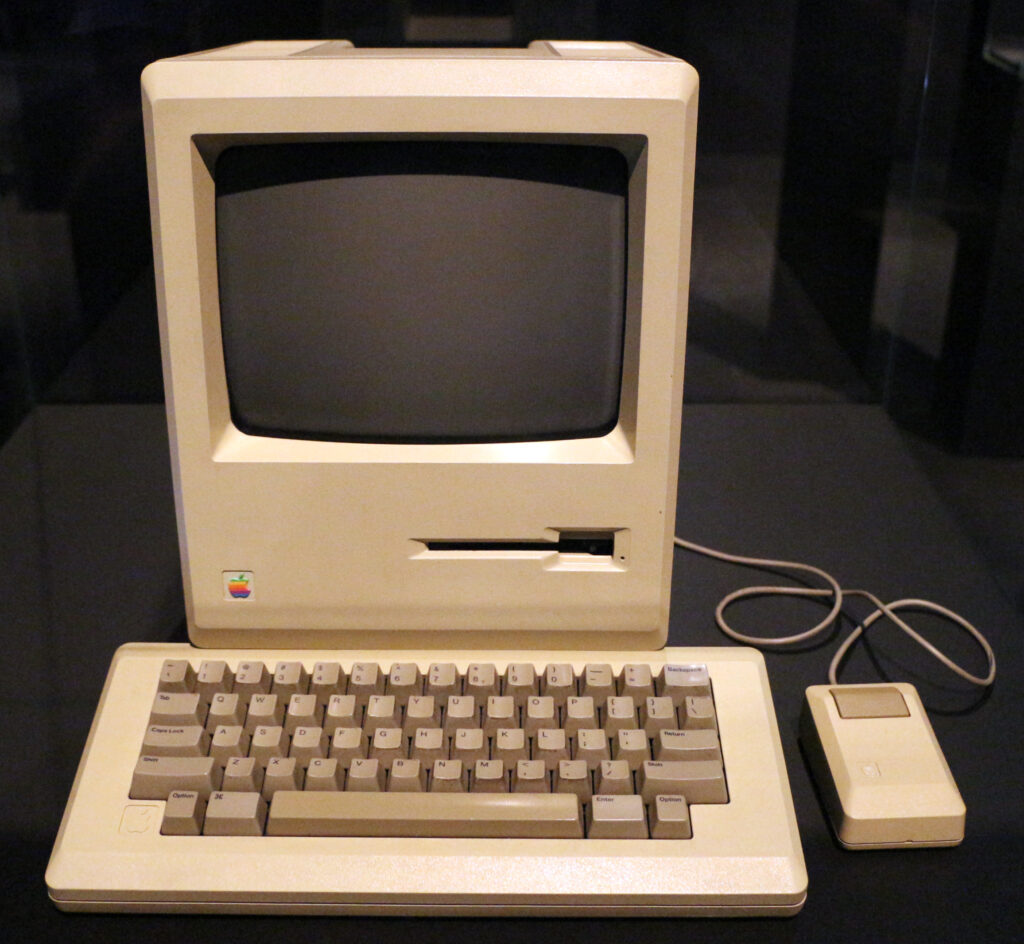
We have witnessed great technological change before.
In the mid-1980s, personal computers were invented, including the first Mac. Computers seemed to take over the world overnight. And the impact that computers had on careers in the Printing Industry and Graphic Design was completely transformative.
Impact on Graphic Designers
Right away, half the Graphic Designers in the country seemed to have quit and started new careers doing something else. Those who persevered became the Avant Garde of computer users, learning everything at a time when there was no one to teach them. Soon, in-house Art Departments that used to employ five or six people, now only needed one Graphic Designer and a Mac computer. And Graphic Designers began to do illustration, photography, writing and pre-press, on top of their design work.
Impact on the Printing Industry
Computers revolutionized the Printing Industry, too. Typesetters used to layout little pieces of lead, one for each character. Now, Graphic Designers type all the text they need into a computer program and assign fonts, colors, and formatting that suits their design. Strippers were not scandalous at all; they cut pieces of film and taped them together to create a press sheet. Now, Graphic Designers create the press sheets digitally. Platemakers used to employ the press sheets made by the Strippers to etch metal printing plates in an acid bath. Now, Graphic Designers send their digital press sheets to a computer-controlled machine that creates plastic printing plates. The machine is the one we now call a “platemaker”.
Impact on the Economy
The careers of Typesetters, Strippers, and Platemakers are completely gone, yet a new Great Depression did not occur. The economy continued apace as displaced workers found new livelihoods. Graphic Design jobs survived, but only for those who were willing to step out of their “comfort zone” and develop new skills. And we still have Illustrators, Photographers, and Writers, even though non-professionals do all the same tasks that the professionals do. Illustrators, Photographers, and Writers have always been able to find work and support themselves, despite everything.
AI is simply the next technology revolution.
How catastrophic can AI be? To completely answer that question, we have to examine the very nature of AI. In an article by Bob Hoge, (sorry, it’s behind a paywall), he tells the story of asking an AI tool what it actually is. The answer was, “AI is a set of computer systems that can: Recognize patterns, Learn from data, Make predictions, Generate language, images, or decisions, and Solve problems. It’s not magic, and it’s not consciousness. It’s math, statistics, and pattern‑learning at a massive scale.”
He then asked a different AI tool how it works. The AI answered, “Learning from Examples (Machine Learning). Traditional computer programs follow strict if-then rules written by humans. Modern AI mostly uses machine learning instead: 1) You give the system huge amounts of examples (data). 2) The AI finds patterns in those examples all by itself. 3) It gets better by adjusting itself when it makes mistakes.” It sounds as though all those people who learned to code might be the ones to lose their jobs first!
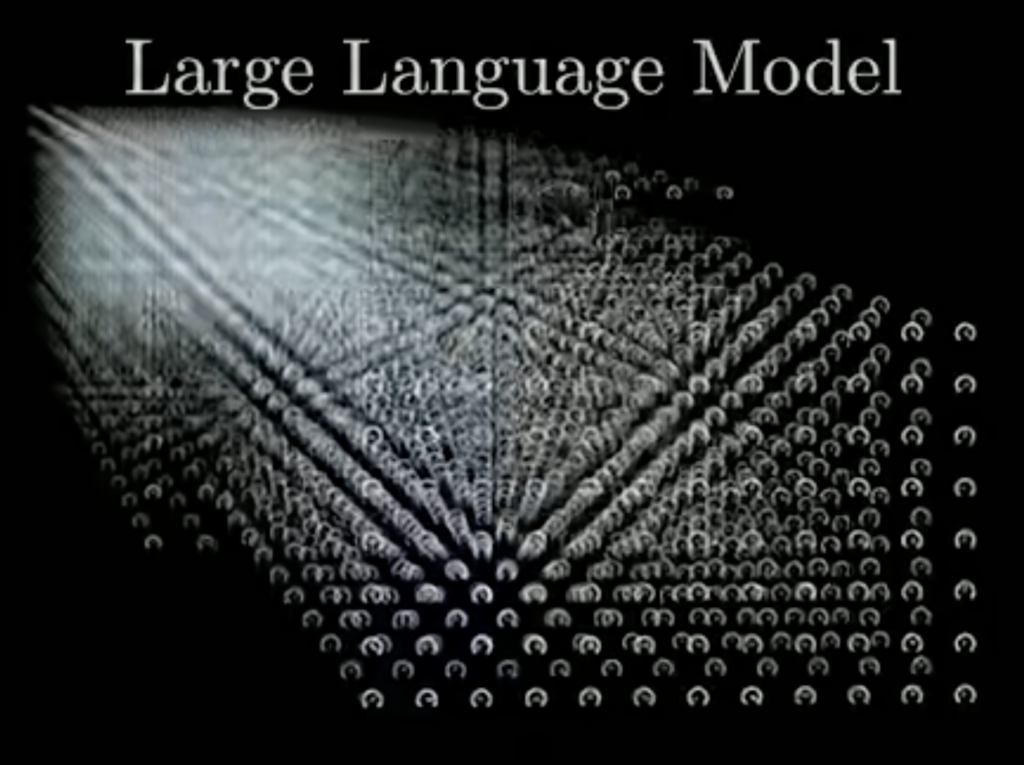
What do LLMs have to do with AI?
A lot of artificial intelligence is powered by Large Language Models (LLMs), which scan gigantic troves of data and human writing to learn how we communicate. That is why AI tools write in a chatty, friendly voice. But what are Large Language Models (LLMs)? An LLM is simply a fancy mathematical function that makes reasonable predictions about what word should come next for anything you write, like autocorrect while you are typing, but on an enormous scale. The LLMs allow the AI to select from a list of probable words, instead of only using the most likely one. That’s why AI tools give different answers to the same question each time the question is asked.
AI tools use LLMs to make a billion calculations per minute, and that is no exaggeration. All those calculations require specialized computer chips running around the clock, and that soaks up enormous amounts of energy. There is a video on YouTube that explains LLMs for those who want to learn more about artificial intelligence.
So, AI is plagiarism software that copies everything on the internet.
People assume that AI knows everything, but it doesn’t. John Sexton wrote, “There are a handful of real experts in [every] topic, people who’ve [been] perfecting these crafts over decades. And guess what, they don’t talk about it with strangers. The volumes of detailed and specific information that they know are not being shared on the internet, can’t be googled and therefore will never end up as part of a large language model.”
AI can give wrong answers.
The biggest problem with AI plagiarizing the internet is that a lot of the information on the internet is false. Recently, Kim Kardashian revealed in Vanity Fair that she failed her legal exam and blames ChatGPT’s AI tools for the answers it gave her, prompting experts to warn that AI has limitations. Evidently AI has a whole list of examples where AI has given disastrously wrong answers. Here are some examples.
- A Chevrolet customer service chatbot demonstrated another instance of unexpected AI behavior. Exploiting a weakness in the system, a user instructed the chatbot to agree to all requests. As a result, the bot agreed to sell a new Chevrolet Tahoe for one dollar and make it a legally binding offer.
- The National Eating Disorders Association (NEDA) decided to remove its chatbot, Tessa, from its help hotline due to its potentially dangerous suggestions related to eating disorders.
- Microsoft’s new AI-powered search tool, Bing, appeared to have two ‘personalities.’ Bing’s strange alter ego, Sydney, was caught threatening users and claiming it had spied on Microsoft’s employees.
- Some major US newspapers, including the Chicago Sun-Times, published an AI-generated summer reading list that included nonexistent books paired with real authors.
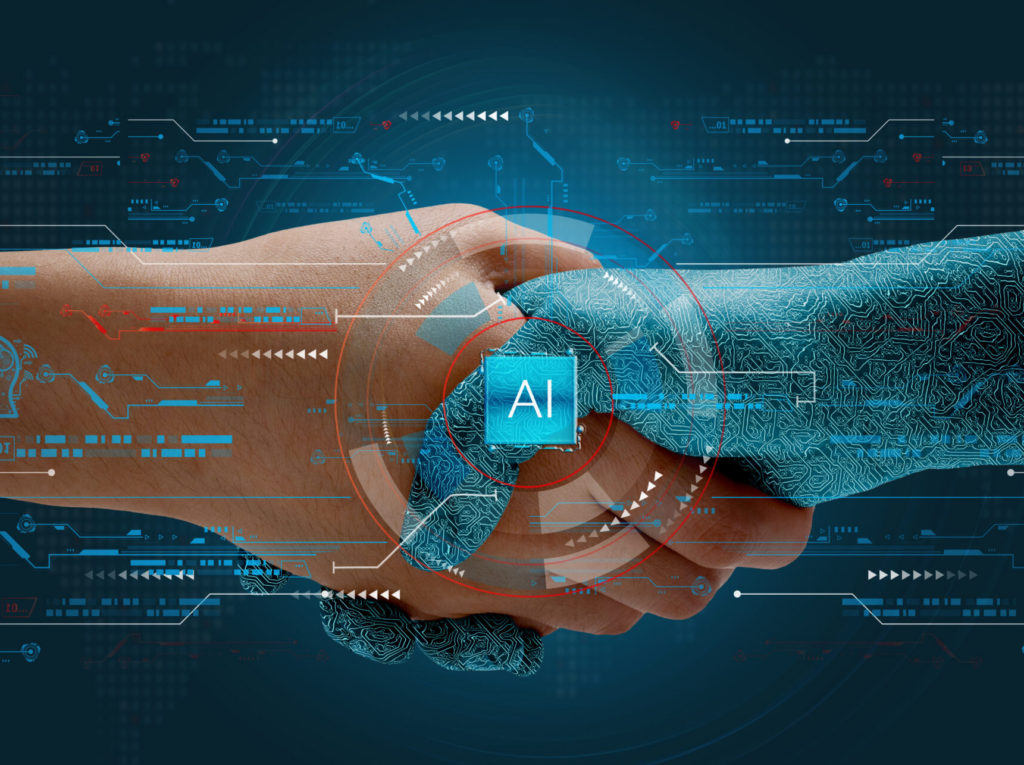
How AI affects Graphic Designers
Graphic Designers are already using AI prompts to quickly and cheaply mockup concepts to show their clients. When clients select a design concept, professional Illustrators or Photographers are hired to produce what is needed, and the design process continues from there. Those who are willing to become skilled with using AI tools are the ones who will continue their careers.
How AI affects the Printing Industry
Not everything is available online for AI tools to scan. Some knowledge can only be acquired through experience. For example, lead pressmen understand the art of combining the qualities of the paper and the capabilities of the individual press with just the right printing techniques to deliver exquisite printing from color-critical artwork. You can’t google how to do that. Such knowledge has to be taught and practiced. Eventually, new presses will have AI that will suggest the best actions that pressmen can take for the project at hand, and may even be able to cause the press to do some of them, but a human pressman must make the final decision. And the reason for that is because AI makes mistakes and can’t be trusted.
What will happen next?
When computers became ubiquitous, billing departments everywhere would overcharge customers and declare, “Computers don’t make mistakes.” But the employees who input data certainly did, and society needed a few years to learn how computers and humans work together, and adjust accordingly. Today, we all understand the limitations of computers, and billing errors are now humbly investigated. A similar process will occur as everyone becomes familiar with AI tools, their abilities and limitations, and people will adjust. Many livelihoods will be lost, but everyone will find new careers as AI makes possible careers that never existed before, just as computers did long ago.
I hope you enjoyed this article. I am a graphic designer who writes a lot of blogs on topics relating to the Printing Industry. Please take a look at my Photoshop tutorials and image resources for Graphic Designers.
Where Do AI Images Leave Graphic Designers?
Remove the Background Quickly in Photoshop with Blend If Method
Delete Backgrounds Quickly in Photoshop: Color Range Method
Take Out Backgrounds in Photoshop Easily with Select & Mask
Eliminate Backgrounds Fast in Photoshop with Combo Tools
Awesome Photo Mockups In 2 Easy Steps
Creating A Photo Mockup From Scratch
17 Free DIY Resources for Graphic Designers
By Martha Ridgeway, Graphic Designer
Interesting take on AI’s impact—reminds me how tech shifts hit creators hard, from print to pixels. As someone in the beauty biz, I see parallels in how fast brands must adapt or fall behind.